

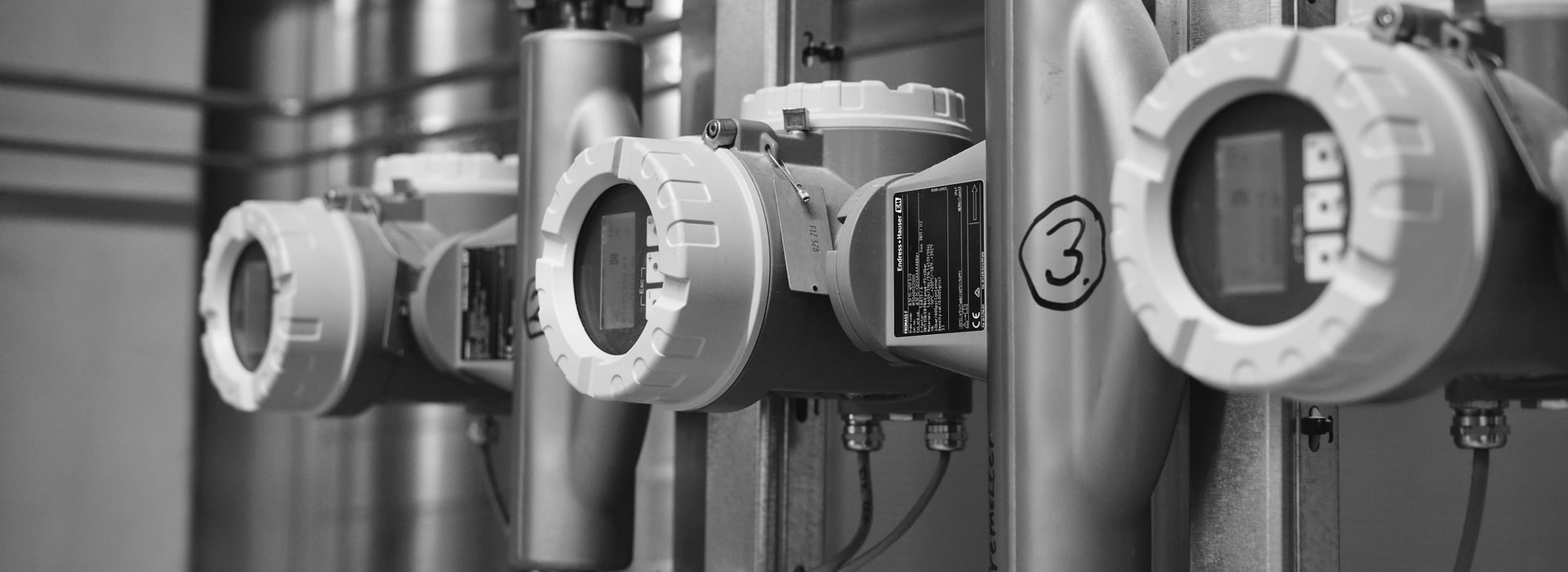
Willie Flow Meter: your connected water flow meter
A connected water flow meter reports your volumes and flow rates continuously, with no manual reading. Our remote-reading module clips onto your pulse-output flow meters in under 10 minutes, with no construction work and no interruption. It is non-intrusive and compatible with nearly every model already in place. And if your fleet needs completing, Willie also supplies flow meters.
Under 10 minutes to install, a refresh every 5 minutes: what Willie changes on your flow meters
Installed quickly
- Simple, fast installation, with no heavy technical work required.
- Instant activation, with no wiring or electrical connection required.
Compatible and connected
- Works with every pulse-output flow meter and meter: cold water, hot water, energy.
- No gateway to install, configure, or power.
- Independent from the site's Wi-Fi and Ethernet.
- If your fleet needs completing, Willie also supplies flow meters.
Non-intrusive
- No drilling, welding, or cutting into pipework.
- Metrological compliance and seals stay intact, manufacturer's warranty maintained.
- No water shutoff, no production stoppage: on a pressurized line, shutting off to fit a sensor often costs more than the sensor itself.
Built to last
- Long-life battery (10 years), IP68 protection rating.
- Aligned with the legal renewal cycle for meters.
Scalable
- Add new measurement points without changing the overall system.
- Modules can be relocated during refits, with remote (OTA) updates.
Willie vs. traditional remote reading
What is a connected water flow meter?
A pulse-output flow meter already emits an electrical pulse for every unit of water that flows through it (1 L, 10 L, or 100 L depending on the pulse weight configured on the device). The meter is already measuring; it simply has no way to transmit that data. Nearly every industrial flow meter has this pulse output, whether mechanical, electromagnetic, or ultrasonic.
A remote-reading module closes that gap. It clips onto the flow meter, counts the pulses, timestamps them, and stores them, with a magnetic mount that installs in under 10 minutes: no drilling, no welding, no cutting. The meter's metrological compliance and seals stay intact, as does the manufacturer's warranty, and service is never interrupted during installation. The module itself is IP68-rated, with a battery that lasts 10 years.
How a connected flow meter works
Data travels over low-power wireless IoT networks, with no gateway to install, configure, or power. LoRaWAN suits large or rural sites, NB-IoT suits dense urban areas and basement technical rooms, and 4G serves as a backup. The key benefit is total independence from the site's Wi-Fi and Ethernet: no IT ticket, no VLAN to negotiate, which is what unlocks multi-site rollouts. Data refreshes every 5 minutes, while competing modules typically settle for an average reading every 30 to 60 minutes. On a leak, that gap is the difference between a few cubic meters and a few hundred.
From there, the chain runs from pulse to module, from module to IoT network, from network to cloud, and finally to an application accessible from any browser or smartphone. That's where you can:
- Track flow and volume curves across every site, side by side
- Set thresholds and monitor consumption at each measurement point
- Get alerts on leaks, threshold overruns, night-time anomalies, and budget drift, with detection in under 30 minutes
- Export pre-filled compliance reports and connect to your ERP, BMS, or CMMS through an open API
The problem with traditional remote flow reading
Traditional remote-reading systems for flow meters come with real friction. Installing a module often means pipework, or even swapping out the measurement point altogether, with a qualified technician spending 2 to 4 hours per flow meter. Electrical cabling has to be run for power, ground, and signal, and standard GSM/3G coverage frequently hits dead zones in basements and technical rooms. On top of that, batteries need replacing every 3 to 5 years, and installation alone can cost €300 to €500 per point, all for data that arrives, at best, every 30 to 60 minutes.
Willie removes each of these frictions at once:
- A non-intrusive device with zero construction work
- A magnetic mount installed in under 10 minutes, with zero wiring
- NB-IoT, LoRaWAN, and 4G coverage that stays reliable, even underground
- A 10-year integrated battery, so there's no maintenance to plan for
Trusted by industry leaders


average reduction in water withdrawals
the refresh rate of your flow data
installation time per flow meter
The Willie platform: from flow data to decisions
The flow meter module is only half the picture. Every reading flows into the Willie SaaS platform, where it becomes something you can act on. From a single dashboard, your teams can:
- Monitor flow and volume data refreshed every 5 minutes (GDPR-compliant)
- Configure alerts for leaks, threshold overruns, night-time anomalies, and budget drift
- Build management dashboards and custom modeling across multiple sites
- Generate compliance reports automatically for local regulatory frameworks
- Integrate with ERP or BMS tools through an open API
- Rely on a guaranteed uptime backed by a Service Level Agreement
- Get AI-assisted guidance to better anticipate budget and contractual drift
Lower operating costs, faster leak response
Deploying connected flow meters pays for itself quickly. Organizations that switch from manual or traditional remote reading to Willie typically see:
- 15% average reduction in water withdrawals
- Leak detection in under 30 minutes, instead of discovering losses on the next bill
- Installation in under 10 minutes per point, well below the €300–500 per point charged for traditional remote reading
- Compliance reports generated automatically, freeing up the hours previously spent compiling them by hand
A frictionless rollout
Operational within 14 days
Audit of your measurement points (days 0-7)
The result: a precise map of your needs and a prioritized rollout plan.
Plug-and-play installation (days 7-14)
Platform activation (day 14)
Thanks to an interface built for non-technical users, your teams are trained on how it works in under an hour.
Ongoing management and compliance (day 14+)
Real results from real customers
"On our construction sites, every cubic meter counts. With Willie, we save 190 m³ per day thanks to real-time alerts. It's also become essential for meeting our sustainability commitments."

Operations Director, leading construction group
"Willie helped us anticipate water restrictions and optimize our consumption. The result: −22% on our annual water bill. A genuine competitive advantage."

CSR Director, international hotel group
Connected water flow meter - Frequently asked questions
What is a pulse output on a flow meter used for?
Every pulse-output flow meter sends an electrical signal at regular volume intervals: 1 L, 10 L, or 100 L depending on the pulse weight configured on the device. The flow meter is already measuring; it simply cannot transmit on its own. That's the role of the remote-reading module: it counts these pulses, timestamps them, and transmits them. Nearly all industrial flow meters and meters have one, whether mechanical, electromagnetic, or ultrasonic.
Do we need to replace our existing flow meters, or can a module be added on top?
No replacement needed. The Willie remote-reading module attaches directly to the flow meter already in place, by magnet or clip, with no drilling or welding. The meter's metrological compliance and seals remain intact, as does the manufacturer's warranty. If your fleet needs to be completed with new flow meters, Willie supplies those too.
Which protocol should we choose for our site: LoRaWAN, NB-IoT, 4G, or 169 MHz radio?
It mostly depends on your site's layout. LoRaWAN suits large or rural sites, with good indoor penetration and low power consumption. NB-IoT is preferable in dense urban areas or for basement technical rooms, where standard mobile coverage reaches its limits. 4G serves as a backup when the first two networks don't cover the area. No need to worry: a coverage study is carried out before deployment to settle this.
Is the module compatible with our CMMS, ERP, and existing management software?
Yes. The Willie platform relies on an open API to send flow data to your business tools: ERP, BMS, CMMS, or billing software. Standard export formats avoid double data entry and feed the data directly into your existing processes.
How does a connected flow meter detect leaks on the network?
Detection relies on continuous analysis of flow data refreshed every 5 minutes. Willie compares observed usage against the site's consumption habits and flags deviations: constant flow at night, consumption drifting from the historical baseline. An identified anomaly triggers an alert in under 30 minutes, sent to the relevant teams.
What's the return on investment for a connected flow meter rollout?
ROI comes from several sources at once: reduced losses from undetected leaks, time saved on manual readings, and avoided penalties from unanticipated threshold overruns. Across a multi-site fleet, installing each measurement point in under 10 minutes also limits deployment costs compared with traditional remote reading billed at €300 to €500 per point.
How do you handle cybersecurity and the protection of transmitted data?
Data is hosted on GDPR-compliant servers, with access restricted to authorized personnel. Willie applies access control and traceability mechanisms, and regular audits verify the security of the chain, from the sensor to the platform.
Does installing the module affect the flow meter's metrological compliance or seals?
No. The module attaches from the outside, without any intervention on the measuring body or the seals in place. The flow meter's metrological compliance and the manufacturer's warranty remain valid after installation.
Ready to transform your water management?
Get a personalized ROI estimate in a 30-minute demo with a Willie expert. ✓ Savings simulation based on your actual volumes ✓ Answers to your compliance questions ✓ No commitment, no obligation
Book my demo