


Connected industrial water meter: measurement and remote reading with no construction work
An industrial water meter has to cover the right flow range, measure consumption accurately, withstand your network conditions and deliver data you can actually use. Our remote-reading module connects the meters already in place in under 10 minutes, with no water shutoff and no production stoppage. Your data comes in every 5 minutes, and anomalies are detected in under 30 minutes.
If your fleet needs completing, Willie also supplies the right meters. Your demo starts from your meter fleet, your uses and your site constraints.
Features of the Willie industrial water meter
Installation on existing meters
- Mounted with a clip, magnet or adhesive strip: installed in under 10 minutes.
- No drilling or cutting pipes, no welding, no production stoppage.
- The module sits outside the instrument: seals, metrological compliance and manufacturer's warranty stay intact.
- On a pressurized pipe or a production line, there is no hydraulic work to schedule (the kind that sometimes costs more than the sensor).
Compatibility with industrial water meters
- Compatible with mechanical meters fitted with a pulse output or sensors, for cold water, hot water and other compatible applications.
- More than 200 models decoded, whatever brand is installed.
- No local gateway to install, configure or power.
- Fleet to complete? Willie also supplies the right meters and flow meters.
Remote reading and monitoring every 5 minutes
- The module counts and timestamps pulses, then transmits volumes over NB-IoT, LoRaWAN or 4G, without relying on the site's Wi-Fi or Ethernet.
- Total volume, flow rate, consumption per metering point, comparison between buildings or sites, history.
- Custom thresholds and alerts: leaks, overnight consumption, threshold breaches, budget overruns.
- Anomalies detected in under 30 minutes.
Autonomy and protection in industrial environments
- Built-in battery with a rated life of 10 years, remote software updates (OTA).
- IP68 protection: technical rooms, basements, construction sites, equipment exposed to water, dust or hard to reach.
- Autonomy applies to the module: the meter's own metrological and hydraulic maintenance still needs planning, depending on its technology.
Integration with your business tools
- Open API to your ERP, BMS, CMMS, billing software and CSR tools.
- The same measurements feed dashboards, alerts and CSRD and regulatory reports, with no double entry.
- Measurement no longer stops at the local display: it runs from the meter all the way to multi-site management and reporting.
Willie vs. traditional remote reading
How a connected industrial water meter works
Measuring water flow and volume
The OIML R 49-1 recommendation defines a water meter as an instrument that continuously measures, memorizes and displays the volume of water passing through its measurement transducer. Two quantities are easy to confuse: instantaneous flow rate (in m³/h), which tells you what is passing at a given moment, and totalized volume (in m³), which tells you what has been consumed. Flow rate is used to control a process or monitor a line. Volume is used to track consumption, allocate costs internally and control distribution.
Measurement quality depends on the meter itself: its technology, its flow range, how it is installed and the characteristics of the liquid. The Willie Smart Meter leaves all of that untouched. It adds remote reading and management to your existing industrial meter, without touching its measuring body.
Pulse output and remote-reading module
A pulse-output meter sends a signal for every volume that flows through it: 1 L, 10 L or 100 L depending on the pulse weight set on the device. The Willie module counts these pulses, timestamps them, stores them and transmits them. The meter body is not modified.
At installation, we check the points that make data right or wrong: pulse duration and pulse weight, low-flow cutoff, empty-pipe detection, flow direction, electrical noise on the signal line and totalization logic.
Compatibility check: you don't need to note anything down. A photo of each meter is all it takes: we extract the information we need from it and confirm whether it is compatible.
Transmission over NB-IoT, LoRaWAN or 4G
The right protocol depends on coverage, building layout and how far apart your metering points are. Willie runs the coverage study and favors NB-IoT, which stays reliable even in basements. LoRaWAN takes over on large sites, and 4G serves as a backup. Either way, the module does not rely on the site's IT network, so you won't need an IT ticket or a new VLAN.
Some industrial fleets also communicate over M-Bus (often written "m bus"). If that is your case, the technical audit checks meter by meter how to bring their data in.
Using the data in the SaaS platform
The full chain fits on one line: meter, pulses, module, IoT network, platform, alert, intervention, report. In the platform, you follow flow and volume curves, history, multi-site comparison, your thresholds, anomalies and estimated losses.
Data becomes useful when it triggers an action: a leak search, an equipment check, a production adjustment, a fix for overconsumption. Every decision then rests on the volumes actually measured.
Trusted by industry leaders


average reduction
in water withdrawals
data refresh
frequency
installation per meter,
with no production stoppage
The Willie formula
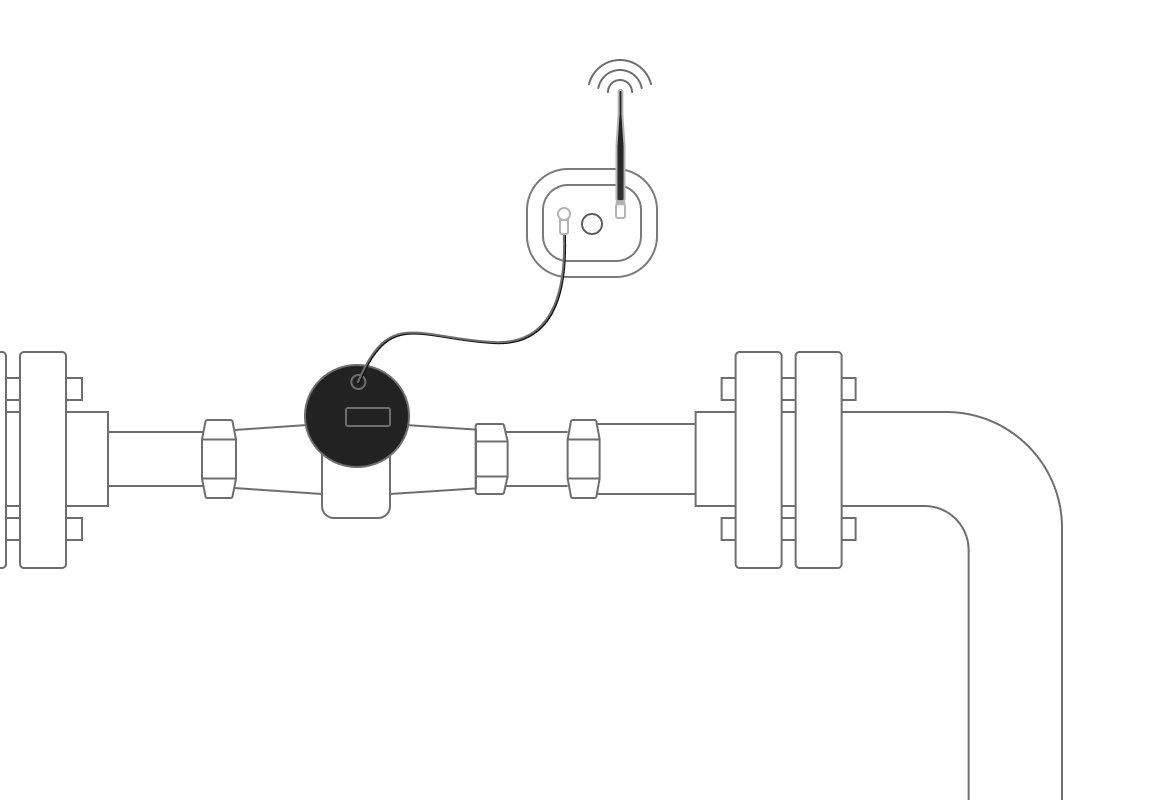
the remote-reading module
A (truly) plug-and-play infrastructure
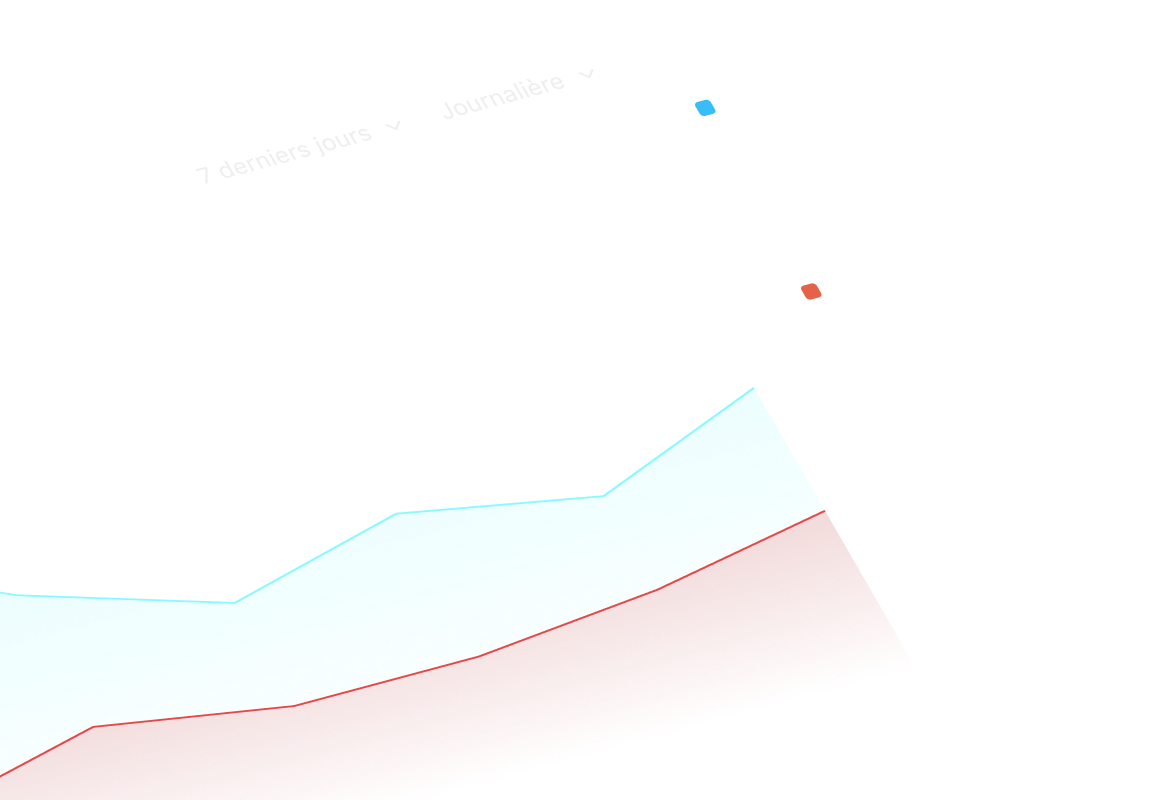
the saas platform
Monitoring, alerts and compliance in one place
Frictionless deployment
Up and running in 14 days.
Audit of your metering points (days 0-7)
Plug-and-play installation (days 7-14)
Platform activation (day 14)
Ongoing management and compliance (day 14+)
Real results from real customers
"On our construction sites, every cubic meter counts. With Willie, we save 190 m³ per day thanks to real-time alerts. It's also become essential for meeting our sustainability commitments."

Operations Director, leading construction group
"Willie detected a hidden leak as soon as it was installed, allowing our plant to cut its water consumption by 18% and save €65,000 in the first year, with the investment paid back in three months."

Plant Director, major industrial group
Willie remote reading vs. traditional industrial metering
Industrial water meter - Frequently asked questions
What are the different types of industrial water meters?
There are plenty, but six families cover most needs. Mechanical meters (single-jet, multi-jet, Woltmann, volumetric) remain rugged and affordable for clean water. Electromagnetic meters, with no moving parts, measure conductive liquids, including loaded ones. Ultrasonic meters, also with no moving parts, offer low pressure loss and come in clamp-on versions. Then there is Coriolis for demanding processes, vortex for clean fluids at sustained flow, and differential pressure devices (orifice plate, venturi), which are simple but cause more pressure loss.
For Willie remote reading, only the output matters: a meter fitted with a pulse output connects, whatever its technology.
Which standards apply to an industrial water meter?
It depends on what the measurement is used for. A clean-water meter used for regulated measurement, such as billing, falls under Directive 2014/32/EU (Annex MI-001), which covers cold and hot water meters for residential, commercial and light industrial use. The OIML R 49-1 recommendation and the ISO 4064 standard set out the metrological requirements. A process instrument, used to run a line rather than to bill, generally falls outside that scope.
Whatever your case, the Willie module is mounted outside the instrument: seals and metrological compliance stay intact.
How do you choose between an electromagnetic, ultrasonic or turbine meter?
Start from the liquid, not the catalog. Electromagnetic meters need a conductive liquid (water is, demineralized water much less so) but tolerate suspended solids. Transit-time ultrasonic meters handle bubbles and particles poorly and, like turbines, need straight pipe runs upstream and downstream. Turbines cost less to buy, but their moving parts wear and create pressure loss. Then weigh flow range, target accuracy, maintenance and budget.
An electromagnetic meter applies Faraday's law: a magnetic field crosses the pipe, and the flowing water induces a voltage proportional to its velocity, measured by electrodes.
Can you install an industrial water meter without cutting the pipe?
Yes, in two cases out of three. Adding a remote-reading module to an existing meter does not touch the pipe: that is the Willie solution. A clamp-on ultrasonic flow meter also attaches to the outside of the pipe. Installing a new in-line device, on the other hand, means cutting, draining and working on the pipework. The audit tells you which of the three applies to each metering point.
Should you choose a pulse output or a 4-20 mA signal?
It depends on what you want to read. A pulse output totalizes a volume: each pulse is worth 1 L, 10 L or 100 L, the natural format for consumption tracking and remote reading. A 4-20 mA signal transmits an instantaneous value, the flow rate, and is the usual format for a PLC regulating a process. On the risk side, a badly configured pulse (wrong pulse weight, bounce, electrical noise) skews totalization, while a badly scaled 4-20 mA skews the flow rate.
For an industrial water meter, Willie remote reading relies on the pulse output.
How do you size an industrial water meter?
Not by pipe diameter! A meter is sized on its actual flow range: minimum, permanent and maximum flow rate, then pressure, temperature, acceptable pressure loss and installation conditions. Oversized, it under-counts low flows, and therefore leaks. Undersized, it wears quickly and restricts flow. The flow curves Willie collects give you the actual range to use before any replacement.
How much does a connected industrial water meter cost?
There is no single price range. The cost depends on the existing meter, its technology, diameter, required accuracy, number of points, any construction work, communication and software: a mechanical meter connected with a module and a complete process flow meter have nothing in common. The good news is that on an existing fleet, the module avoids construction work, whereas traditional remote reading costs 300 to 500 € per point to install. During a 30-minute demo, a Willie expert prices your project based on your actual fleet.
Ready to transform your water management?
Get a personalized ROI estimate in a 30-minute demo with a Willie expert. ✓ Savings simulation based on your actual volumes ✓ Answers to your compliance questions ✓ No commitment, no obligation
Book my demo